

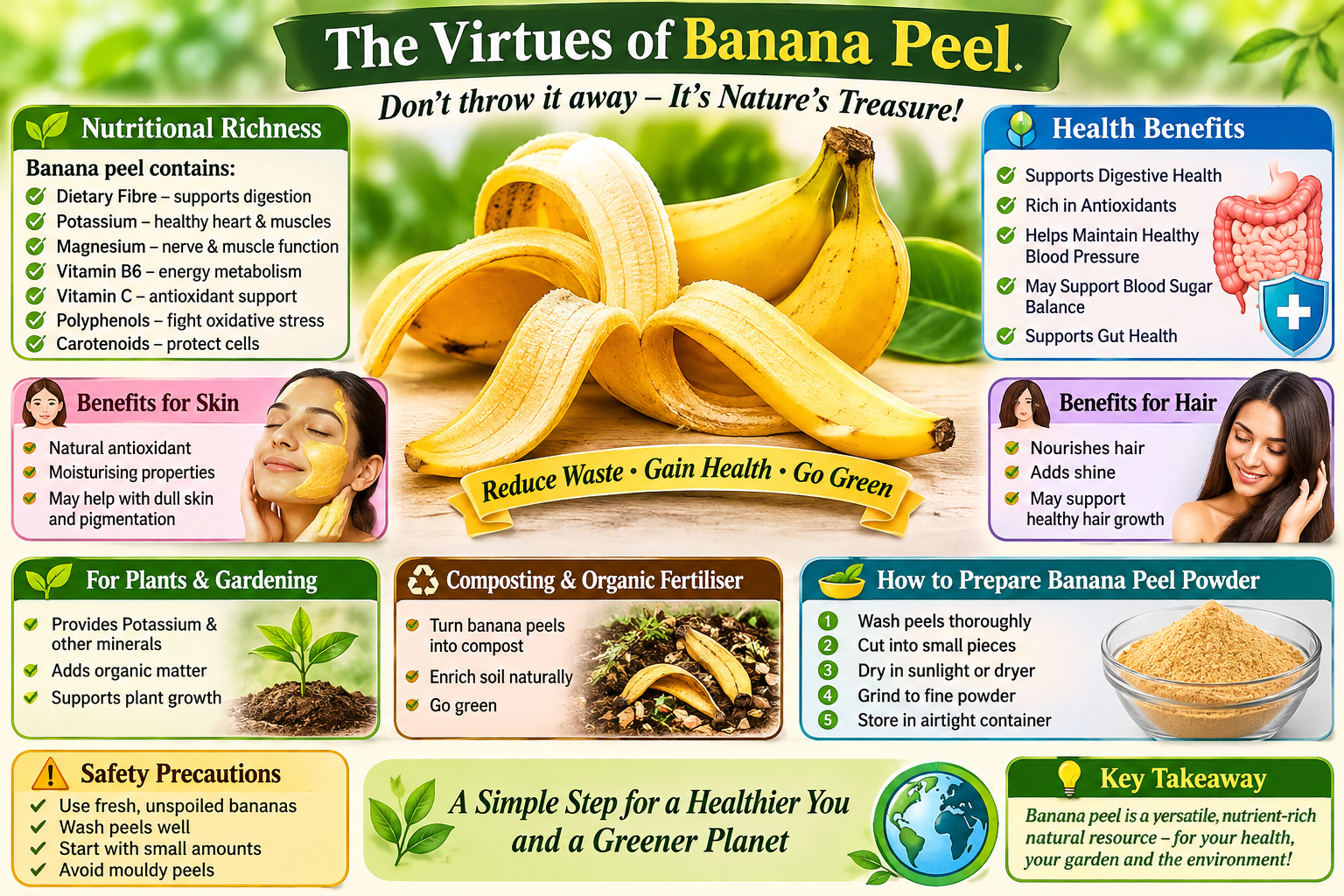
THE VIRTUES OF BANANA PEEL
Nutritional value, potential health uses, skincare, haircare and gardening
Banana peel is often discarded, but it contains dietary fibre, minerals and plant compounds. It can be useful as a compost material and is also being studied as a food ingredient and source of natural extracts. The strength of evidence differs considerably between these uses.
1. Nutritional components
| Component | Potential role |
| Dietary fibre | May support bowel regularity and digestive health. |
| Potassium | Contributes to normal muscle, nerve and blood-pressure function. |
| Magnesium | Supports normal muscle and nerve function. |
| Vitamin B6 | Plays a role in normal energy metabolism. |
| Vitamin C | Contributes to antioxidant protection and collagen formation. |
| Polyphenols and carotenoids | Plant compounds with antioxidant activity, mainly demonstrated in laboratory research. |
The exact composition varies with banana variety, ripeness and growing conditions. The peel is not a standardised source of nutrients, and its nutrient content should not be assumed from the values for banana flesh.
2. Potential health benefits
Digestive health: The fibre in banana peel may contribute to bowel regularity. Large quantities may cause bloating or digestive discomfort.
Antioxidant activity: Banana peel contains polyphenols and other plant compounds that show antioxidant activity in laboratory studies. This does not prove a disease-prevention benefit in people.
Muscle and nerve function: Its potassium and magnesium contribute to normal body functions, but banana peel has not been established as a treatment for cramps or mineral deficiency.
Blood pressure and heart health: Potassium is important for normal blood-pressure regulation. Eating banana peel has not been shown to treat hypertension or heart disease.
Blood sugar and gut bacteria: Peel fibre and other components are being researched, but banana peel is not an established treatment for diabetes or a proven prebiotic therapy.
3. Skin care
Banana peel is traditionally used in home skincare and contains plant compounds of interest to cosmetic research. However, there is not enough reliable clinical evidence that rubbing the peel on the skin treats acne, wrinkles, pigmentation or dark circles. It may irritate sensitive skin or cause an allergic reaction. Do not apply it to broken or inflamed skin; stop if redness, itching or burning occurs.
4. Hair care
Banana peel extracts are being explored for cosmetic applications, and the peel is sometimes included in homemade hair masks. There is currently no strong clinical evidence that banana peel promotes hair growth, reverses hair loss or treats scalp disease. A homemade preparation may leave residue or irritate the scalp.
5. Gardening and composting
- Banana peel adds organic matter to compost.
- It contains potassium and smaller amounts of other plant nutrients; the amounts are variable.
- Chopping the peel helps it break down more quickly.
- Mix it with dry leaves and other suitable green waste to maintain a balanced compost pile.
- Use mature, properly decomposed compost rather than placing large quantities of fresh peel around plant roots.
6. Preparing banana peel powder
- Choose fresh, sound bananas. Do not use mouldy, rotten or chemically contaminated peels.
- Wash the bananas thoroughly under clean running water before peeling.
- Cut the peel into small, even strips.
- Dry in a clean food dehydrator or solar dryer until completely dry and crisp. Protect it from dust, insects and animals.
- Grind the dried peel into powder using clean, dry equipment.
- Store in a clean, airtight, food-grade container in a cool, dry place. Discard it if it develops moisture, an unusual smell or mould.
Food-use caution: Banana peel powder is not a proven medicine or a standardised supplement. If using it as a food ingredient, use only food-grade peels prepared hygienically and begin with a small culinary amount. Avoid large or concentrated doses, particularly if you have kidney disease, have been advised to restrict potassium, or take medicines that affect potassium levels. Seek advice from a qualified clinician or dietitian where relevant.
7. Common preparations and their uses
| Preparation | Possible application |
| Fresh chopped peel | Composting; use in a managed compost pile. |
| Dried peel powder | Experimental food ingredient; not a proven therapeutic supplement. |
| Composted banana peel | Adds organic matter and nutrients to garden soil. |
| Banana peel extract | Research and potential cosmetic formulation ingredient. |
| Fermented peel liquid | Sometimes used experimentally in gardening; nutrient content and safety are not standardised. |
8. Important limitations and safety
- Most claimed medicinal effects are based on laboratory studies, traditional use or early research, not high-quality human clinical trials.
- Banana peel should not replace prescribed medicines or medical treatment.
- Wash peels thoroughly. Residues from handling, transport or agricultural treatments may be present on the surface.
- People with banana allergy should avoid banana peel.
- People with kidney disease or a prescribed potassium restriction should not use concentrated peel products without medical advice.
Conclusion
Banana peel is a useful source of compostable organic material and contains fibre, minerals and antioxidant plant compounds. Its strongest practical use is in composting and waste reduction. Possible nutritional and cosmetic applications are still being studied, and claims that it treats specific diseases, improves hair growth or reverses skin ageing are not established.