

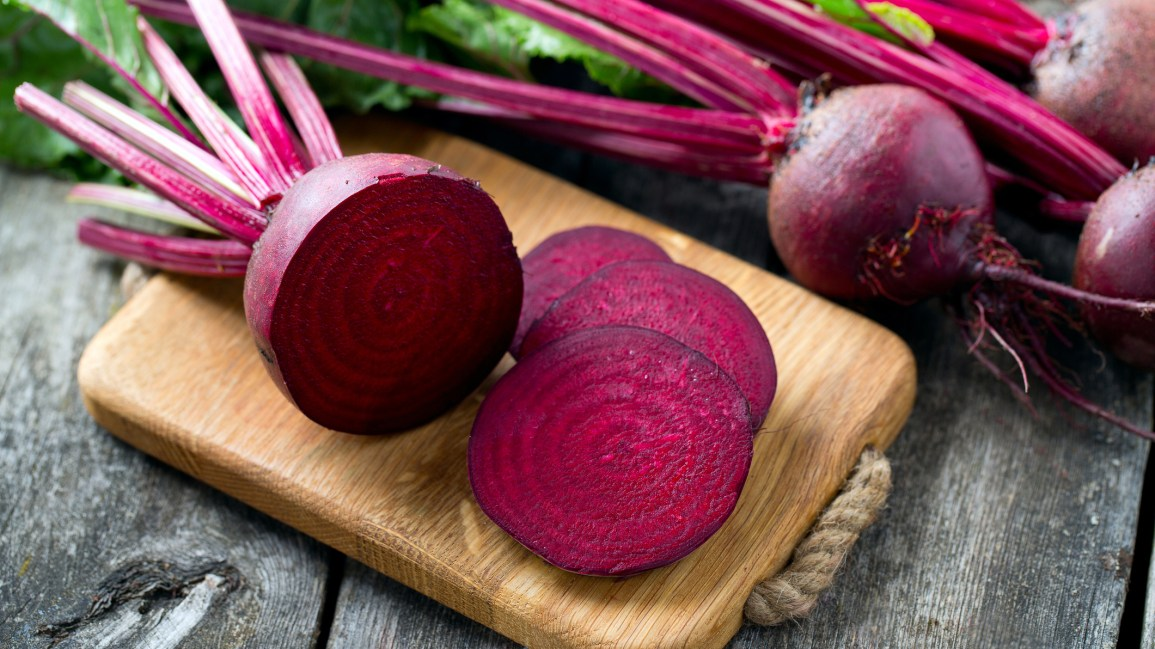
How to eat beetroot
Beets are super versatile — you can eat the root and the greens. Just scrub well, because they grow underground.
1. Raw
– Grate it: Into salads, slaws, or raita. Earthy + sweet crunch.
– Juice it: Mix with carrot/apple/orange to cut the strong earthy taste. 1 small beet is plenty — it’s potent.
– Thin slices/cubes: With lemon + chaat masala as a snack.
2. Cooked
– Boil/steam: 30-40 min whole with skin on. Skin slips off after. Slice for salad or blend into soup.
– Roast: Cube, toss with oil + salt, roast 400°F/200°C for 35-45 min. Brings out sweetness. Best flavor IMO.
– Sauté greens: Beet greens = like spinach. Chop + sauté with garlic. Don’t waste them.
– Curry/sabzi: North Indian style with jeera, or South Indian poriyal with coconut.
– Pickle: Vinegar + salt + water. Bright pink pickled beets.
Pro tips:
1. Stains everything — wear gloves or use a paper towel to hold it.
2. Don’t be alarmed: Red pee/poop after eating beets is normal. It’s called beeturia.
3. Peel after cooking: Skin comes off easy and you lose fewer nutrients.
### Key benefits
1. Nitrates → Blood flow
Beets are #1 for dietary nitrates. Your body converts them to nitric oxide, which relaxes blood vessels. That’s why beet juice is used by athletes — can improve stamina and lower BP. Standard dose in studies: ∼250-500ml beet juice or 1-2 medium beets.
2. Nutrient dense
– Folate: Critical for cell repair, pregnancy. 1 cup = 37% daily value.
– Manganese: Bone + metabolism
– Potassium: Blood pressure + muscle function
– Fiber: 3-4g per cup, feeds gut bacteria
– Antioxidants: Betalains give the red color. Anti-inflammatory, studied for liver support.
3. Other perks
– Liver support: Betalains help detox pathways
– Stamina: Shown to improve time-to-exhaustion in exercise by 3-15%
– Brain: Increased blood flow to brain in older adults in some studies
1. Incomplete protein: Beets have little protein and lack some essential amino acids. You’d lose muscle over months.
2. Low calories: 1 cup cooked = 60 cal. You’d need 25+ cups/day to hit 1500 cal. That’s… a lot of beets.
3. Missing nutrients: Almost no B12, vitamin D, selenium, zinc, omega-3s. No healthy fats to absorb the vitamin A/K.
4. Oxalates: Beets are high. Risk of kidney stones if that’s your only food for months.
5. Sugar load: Lots of beets = lots of natural sugar. Not balanced.
Best combo if you had to pick 2-3 foods with beets: beets + lentils + rice, or beets + eggs + potato. That covers calories, protein, and most micronutrients.