

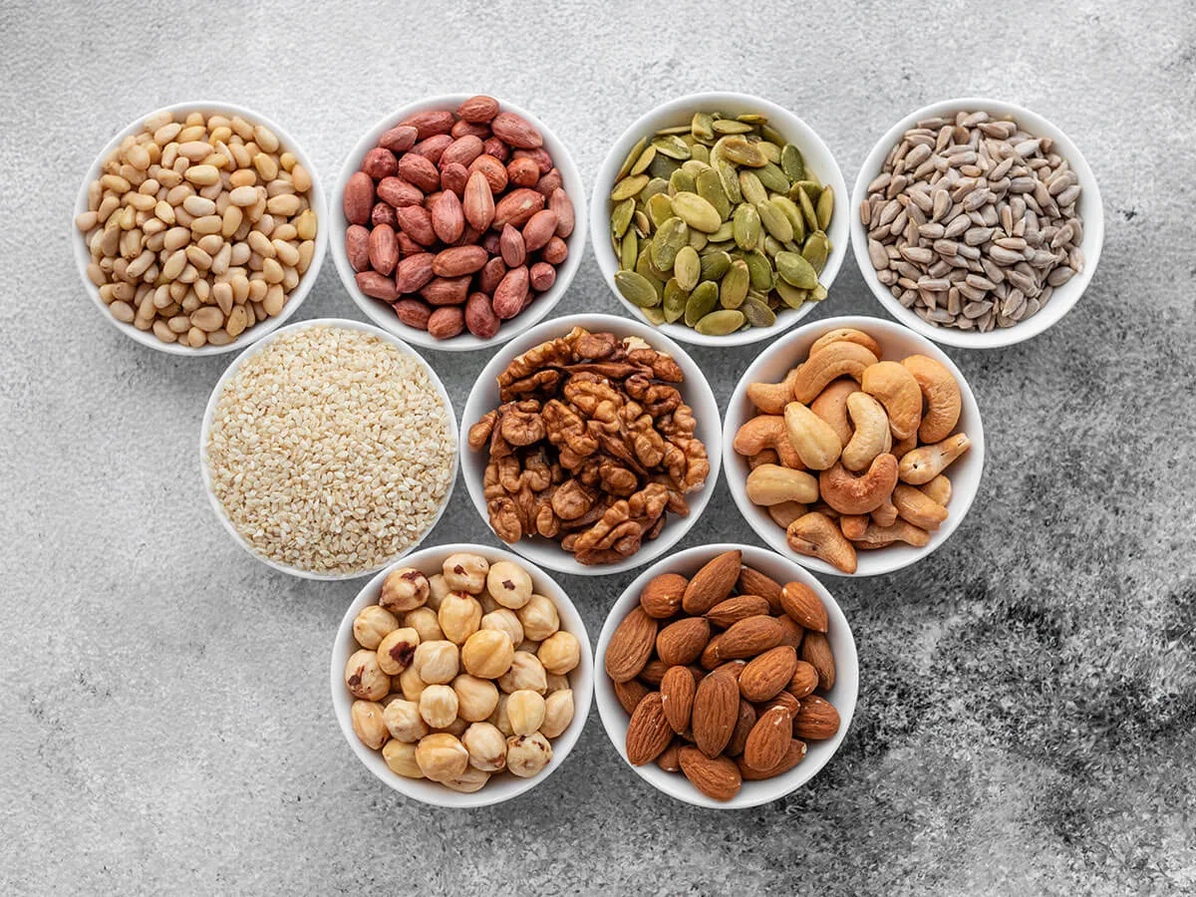
Seeds are nutritious foods that provide protein, healthy fats, dietary fibre, vitamins, minerals and antioxidants. Including different types of seeds in a balanced diet may support heart health, digestion, skin health and overall well-being.
1. Sunflower Seeds
Scientific name: Helianthus annuus
Key nutrients: Vitamin E, protein, magnesium, selenium and healthy fats.
Health benefits
- Supports skin health: Vitamin E acts as an antioxidant and helps protect cells against oxidative damage.
- Promotes heart health: Sunflower seeds contain unsaturated fats that can support healthy cholesterol levels when they replace saturated fats in the diet.
- Supports hair health: They provide protein and micronutrients required for normal hair growth.
- Helps muscle function: Magnesium contributes to normal muscle and nerve function.
- Provides antioxidant protection: Vitamin E helps protect cells from oxidative stress.
- Supports energy metabolism: B vitamins and minerals contribute to the body’s normal energy-producing processes.
Recommended intake: Approximately 10–15 grams per day.
How to consume: Eat them raw or lightly roasted without excessive salt. Add them to salads, oatmeal, yoghurt, smoothies or homemade seed mixtures.
Precautions: Sunflower seeds are calorie-dense. Choose unsalted varieties if you need to limit sodium intake.
2. Pumpkin Seeds
Scientific name: Cucurbita species
Key nutrients: Zinc, magnesium, protein, iron and unsaturated fats.
Health benefits
- Supports immune function: Zinc is essential for normal immune system function.
- Supports reproductive health: Zinc contributes to normal reproductive function in men and women.
- Promotes muscle health: Magnesium helps maintain normal muscle and nerve function.
- Supports bone health: Magnesium and phosphorus contribute to healthy bones.
- Contributes to heart health: Unsaturated fats and magnesium support a heart-healthy dietary pattern.
- Helps maintain muscles: Protein supports tissue repair and muscle maintenance.
Recommended intake: Approximately 10–15 grams per day.
How to consume: Eat shelled pumpkin seeds raw or lightly roasted. They can be added to salads, soups, porridge, vegetable dishes and breakfast cereals.
Precautions: Pumpkin seeds are nutritious but are not a proven treatment for infertility or prostate disease.
3. Chia Seeds
Scientific name: Salvia hispanica
Key nutrients: Omega-3 fatty acid ALA, dietary fibre, protein, calcium, phosphorus and magnesium.
Health benefits
- Improves digestive health: Dietary fibre supports regular bowel movements and may help prevent constipation.
- Supports weight management: Chia seeds absorb water and form a gel, which may help you feel full for longer.
- Supports heart health: Their fibre and plant-based omega-3 fatty acids contribute to a balanced diet.
- Helps manage blood sugar: Fibre may slow digestion and moderate the rise in blood glucose after meals.
- Supports bone health: They supply calcium, phosphorus and magnesium.
- Provides plant-based omega-3: ALA is an essential fatty acid that the body needs from food.
Recommended intake: Start with 1 teaspoon and gradually increase to approximately 1 tablespoon, or 12 grams, per day if tolerated.
How to consume: Soak chia seeds in water or milk for 15–30 minutes. Add them to smoothies, oatmeal, yoghurt or homemade chia pudding.
Precautions: Do not swallow a spoonful of dry chia seeds, as they expand after absorbing liquid and may cause swallowing problems. Drink sufficient water and increase fibre gradually.
4. Black Sesame Seeds
Scientific name: Sesamum indicum
Key nutrients: Calcium, iron, copper, healthy fats, protein and lignans.
Health benefits
- Supports bone health: Sesame seeds provide minerals involved in maintaining healthy bones.
- Provides antioxidants: Sesame lignans, including sesamin, have antioxidant properties.
- Supports heart health: Their unsaturated fats can contribute to a heart-healthy diet.
- Supports normal body functions: Copper and iron contribute to several important physiological processes.
- Contributes to skin nutrition: Healthy fats and minerals help meet the body’s nutritional requirements.
- Adds nutritional variety: Black sesame seeds provide a convenient source of minerals and healthy fats.
Recommended intake: Approximately 5–10 grams per day.
How to consume: Add black sesame seeds to chutneys, salads, vegetables, homemade bread or seed powder. Light roasting can improve their flavour.
Important clarification: There is insufficient scientific evidence that black sesame seeds reverse grey hair or reliably increase melanin production. Hair colour is influenced by genetics, age and other factors, including certain nutritional deficiencies.
Precautions: Avoid sesame seeds if you have a sesame allergy.
5. Flax Seeds (Alsi)
Scientific name: Linum usitatissimum
Key nutrients: Omega-3 fatty acid ALA, dietary fibre, protein and lignans.
Health benefits
- Supports cholesterol management: Flaxseed, particularly ground flaxseed, may help improve cholesterol levels in some people.
- Improves bowel regularity: Its fibre can help relieve constipation.
- Supports heart health: ALA and fibre contribute to a heart-healthy eating pattern.
- May help with blood sugar management: Fibre can slow digestion and may moderate post-meal blood glucose responses.
- Provides antioxidant compounds: Lignans are plant compounds being studied for their potential health effects.
- Supports general nutrition: Flaxseed provides healthy fats, protein and dietary fibre.
Recommended intake: Start with 1 teaspoon of ground flaxseed and gradually increase to approximately 1 tablespoon, or 7–10 grams, per day.
How to consume: Grind the seeds before eating. Add them to oatmeal, yoghurt, smoothies or whole-wheat flour for rotis.
Precautions:
- Drink enough water when increasing fibre intake.
- Avoid raw or unripe flaxseeds.
- If you take blood-thinning medication, consult your doctor before using concentrated flaxseed supplements or making substantial dietary changes.
6. Hemp Seeds
Scientific name: Cannabis sativa
Key nutrients: Plant-based protein, omega-3 and omega-6 fatty acids, magnesium, iron and zinc.
Health benefits
- Supports muscle maintenance: Hemp seeds provide protein containing essential amino acids.
- Supports heart health: Their unsaturated fats can replace less healthy fat sources.
- Supports energy metabolism: Magnesium contributes to normal energy production.
- Supports skin health: Essential fatty acids help maintain normal skin function.
- Provides plant-based protein: Hemp seeds are a useful option for vegetarian and vegan diets.
- Contributes to mineral intake: They provide magnesium, iron and zinc.
Recommended intake: Approximately 10 grams per day, or 1 tablespoon of hulled hemp seeds.
How to consume: Add them to salads, soups, oatmeal, smoothies, yoghurt or cooked vegetables.
Precautions: Food-grade hemp seeds are different from cannabis products containing intoxicating THC. People with chronic kidney disease should consult a healthcare professional about suitable portions and mineral intake.
7. Black Cumin Seeds (Kalonji)
Scientific name: Nigella sativa
Key nutrients and compounds: Fixed oils, small amounts of protein and minerals, and bioactive compounds such as thymoquinone.
Health benefits
- Antioxidant activity: Thymoquinone and other compounds have demonstrated antioxidant effects in laboratory studies.
- Traditional digestive use: Kalonji has traditionally been used as a culinary spice.
- Potential metabolic benefits: Some studies have examined its effects on blood sugar and cholesterol, but stronger evidence is needed.
- Supports dietary variety: It adds flavour and aroma to everyday meals.
- Potential anti-inflammatory activity: Some of its compounds have shown anti-inflammatory effects in laboratory research, but clinical benefits are not yet established.
- Provides bioactive compounds: Its components are being investigated for several possible health applications.
Recommended culinary use: A pinch to approximately half a teaspoon, according to taste.
How to consume: Add kalonji to vegetables, dal, parathas, pickles or homemade bread.
Important clarification: Kalonji is different from ordinary cumin (Cuminum cyminum) and black sesame seeds.
Precautions: Concentrated black cumin oil and extracts may interact with medicines, including those used for diabetes and high blood pressure. Seek medical advice before using them in medicinal doses.
Comparison of the Seven Seeds
| Seed | Main nutritional benefit | Potential health contribution |
| Sunflower | Vitamin E and healthy fats | Antioxidant protection and heart-healthy nutrition |
| Pumpkin | Zinc, magnesium and protein | Immune function and muscle maintenance |
| Chia | Fibre and plant omega-3 | Digestion, fullness and heart health |
| Black sesame | Minerals and lignans | Bone nutrition and antioxidant intake |
| Flax | Fibre, ALA and lignans | Bowel regularity and cholesterol management |
| Hemp | Protein and healthy fats | Muscle maintenance and plant-based nutrition |
| Black cumin | Thymoquinone and other compounds | Culinary use and potential biological effects under study |
Suggested Daily Seed Consumption Plan
You do not need to eat all seven seeds every day. A practical routine could include:
| Time | Seed | Suggested quantity |
| Breakfast | Sunflower seeds | 1 teaspoon |
| Breakfast | Pumpkin seeds | 1 teaspoon |
| Breakfast or snack | Soaked chia seeds | 1 teaspoon |
| Breakfast or lunch | Ground flaxseed | 1 teaspoon |
| Lunch | Black sesame seeds | 1 teaspoon |
| Lunch or snack | Hemp seeds | 1 teaspoon |
| With a meal | Black cumin | A pinch |
Start with small quantities, particularly if your diet is low in fibre. Adjust portions according to your nutritional needs, calorie intake and digestive tolerance.
Which Seeds Are Best for Specific Health Goals?
- For digestion and constipation: Chia seeds and ground flaxseed.
- For vitamin E: Sunflower seeds.
- For zinc and magnesium: Pumpkin seeds.
- For plant-based protein: Hemp seeds and pumpkin seeds.
- For mineral intake: Black sesame seeds.
- For plant-based omega-3: Flaxseed and chia seeds.
- For culinary use and bioactive compounds: Black cumin seeds.
Important Health Precautions
- Seeds should complement a balanced diet, not replace prescribed medicines.
- Choose unsalted varieties and store seeds in airtight containers away from heat and moisture.
- Introduce fibre-rich seeds gradually to reduce bloating and gas.
- People taking blood thinners or medicines for diabetes or blood pressure should seek professional advice before using concentrated seed oils, extracts or medicinal-dose mixtures.
- People with kidney disease or seed allergies may need to avoid particular seeds or adjust their intake.
- Hair loss, premature greying, infertility and persistent digestive problems may require medical assessment rather than dietary changes alone.