

THE SOAKED NUTS GUIDE
Soaking times, nutrition benefits, practical portions, and safety tips
Overview
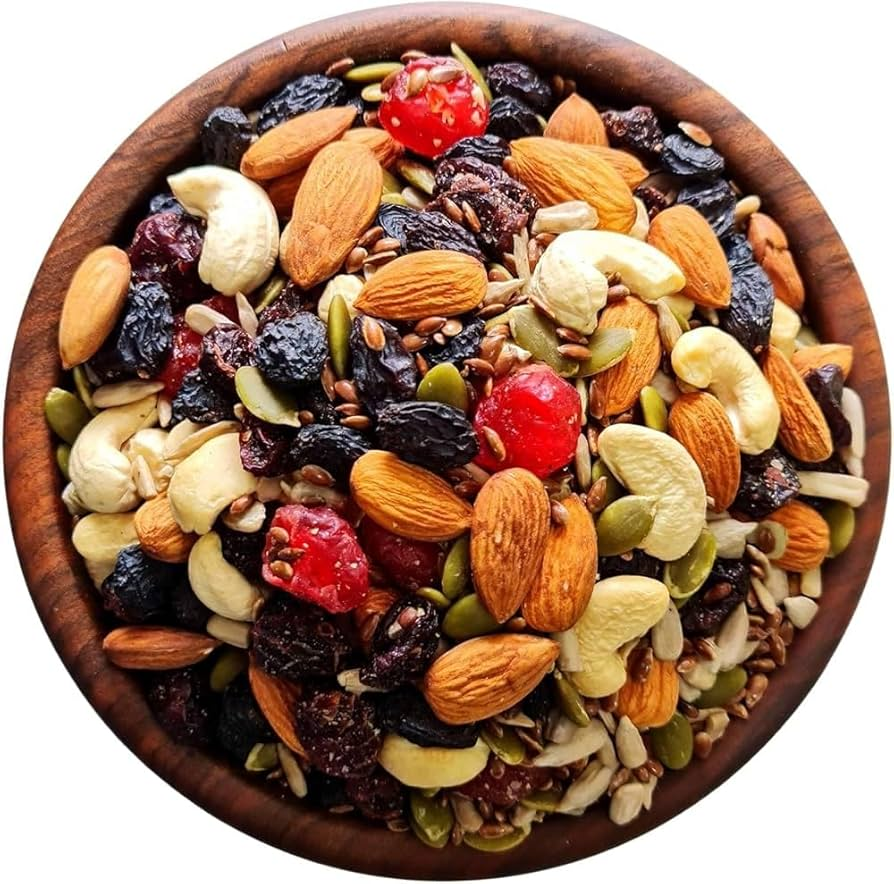
This guide covers six foods shown in the image: almonds, walnuts, cashews, pistachios, dried figs, and hazelnuts. Soaking can soften their texture and make them easier to chew. However, soaking is optional for most nuts, and many claims that it substantially improves nutrient absorption are not well established.
1. Almonds (Badam)
Suggested soaking time: 8–12 hours
Potential benefits:
- Provide vitamin E, healthy fats, protein, and magnesium.
- Support normal health as part of a balanced diet.
- Soaking softens the nuts; removing the skin is optional.
- Soaking may reduce some phytate, but the effect varies.
How to prepare: Soak in clean water, preferably in the refrigerator overnight. Drain and rinse before eating.
2. Walnuts (Akhrot)
Suggested soaking time: 6–8 hours
Potential benefits:
- Provide plant-based omega-3 fat (ALA), polyphenols, and other nutrients.
- Can contribute to a heart-healthy dietary pattern.
- Soaking softens the texture but is not proven to substantially improve omega-3 absorption.
How to prepare: Soak in the refrigerator if preparing overnight. Drain and rinse before eating.
3. Cashews (Kaju)
Suggested soaking time: 4–6 hours
Potential benefits:
- Provide magnesium, copper, zinc, protein, and unsaturated fats.
- Contribute nutrients needed for normal muscle, nerve, and immune function.
- Soaking makes them softer and useful for creamy sauces or smoothies.
How to prepare: Drain and rinse after soaking. Use commercially prepared food-safe cashews; never eat raw cashews straight from the shell.
4. Pistachios (Pista)
Suggested soaking time: 4–8 hours
Potential benefits:
- Provide protein, fiber, vitamin B6, potassium, and antioxidants.
- Fiber supports normal bowel function.
- Contain unsaturated fats that can contribute to a heart-healthy diet.
- Soaking is optional.
How to prepare: If soaking, use shelled, unsalted pistachios and refrigerate during longer soaking periods.
5. Dried figs (Anjeer)
Suggested soaking time: 6–8 hours
Potential benefits:
- Provide dietary fiber that supports bowel regularity.
- Supply minerals including potassium and calcium.
- Soaking makes dried figs softer and easier to chew.
- Dried figs contain concentrated natural sugars.
How to prepare: Wash before soaking; refrigerate while soaking. Eat the fruit. The soaking water is not a special detox drink.
6. Hazelnuts
Suggested soaking time: 8–10 hours
Potential benefits:
- Rich in vitamin E and monounsaturated fats.
- Provide manganese, copper, and fiber.
- Can contribute to cardiovascular health as part of a balanced diet.
- Soaking may soften them but is not necessary for most people.
How to prepare: Soak only if you prefer a softer texture. Drain, rinse, and eat; refrigerate during prolonged soaking.
Best Time to Eat Soaked Nuts
| Time | Suggested option | Practical note |
| Morning / breakfast | Almonds and walnuts | A convenient way to add healthy fats and protein. |
| Mid-morning | Pistachios or cashews | A filling snack. |
| Afternoon | Hazelnuts or almonds | Provides energy and nutrients. |
| With breakfast or as a snack | Soaked dried figs | Adds fiber and natural sweetness. |
There is no strong evidence that eating soaked nuts on an empty stomach gives extra benefits. Eat them at a time that fits your routine.
Example Daily Portion
For many healthy adults, about 25–30 g of nuts per day is a practical starting point, adjusted to individual energy needs and the rest of the diet. The following is an illustrative combination, not a mandatory prescription:
- Almonds: 5–6 pieces
- Walnuts: 2 whole walnuts (4 halves)
- Cashews: 3–4 pieces
- Pistachios: 4–6 kernels
- Dried fig: 1 piece
- Hazelnuts: 2–3 pieces
This combination may exceed 25–30 g depending on nut size. If you want to stay near that amount, choose a smaller selection of nuts rather than eating every listed portion each day.
Safe Soaking Method
- Choose fresh, good-quality nuts and dried figs.
- Rinse under clean running water.
- Place them in separate clean containers and cover with drinking water.
- Refrigerate during soaking, especially overnight, rather than leaving them at room temperature for long periods.
- Drain and rinse before eating. Do not reuse soaking water if it is cloudy, smells unusual, or was stored improperly.
- Eat promptly after draining. Discard food with an unusual smell, sliminess, or other signs of spoilage.
What Science Says About Soaking
- Digestion: Soaking may soften nuts, but it does not reliably prevent gas or bloating.
- Mineral absorption: Evidence that soaking meaningfully improves mineral absorption is limited.
- Heart health: Nuts can contribute to a heart-healthy diet whether soaked or unsoaked.
- Antioxidants: Nuts naturally contain beneficial compounds; soaking is not required to obtain them.
- Weight management: Portion size matters because nuts are energy-dense foods.
- Dried figs: Figs are fruits, not nuts. They provide fiber and natural sugars.
A 2020 study in Food Chemistry examined soaking almonds, walnuts, hazelnuts, and peanuts. Its findings did not support the common claim that soaking substantially improves the mineral-to-phytate ratio. Results can vary with the food and soaking conditions.
Important Precautions
- Avoid nuts to which you have an allergy.
- If you have diabetes, account for the natural sugars in dried figs and consider portion size.
- If nuts cause bloating, try a smaller portion; soaking may not solve the problem.
- If you have difficulty swallowing, choose a texture that is safe for you.
- Soaking does not replace a balanced diet or treatment for a nutritional deficiency.
Quick Reference Table
| Food | Suggested soak | Main nutritional highlights |
| Almonds | 8–12 hours | Vitamin E, healthy fats, protein, magnesium |
| Walnuts | 6–8 hours | ALA omega-3 fat, polyphenols |
| Cashews | 4–6 hours | Magnesium, copper, zinc, unsaturated fats |
| Pistachios | 4–8 hours | Protein, fiber, vitamin B6, potassium |
| Dried figs | 6–8 hours | Fiber, potassium, calcium, natural sugars |
| Hazelnuts | 8–10 hours | Vitamin E, monounsaturated fats, fiber |
Conclusion
Soaking is mainly a preparation choice that changes texture. Nuts and dried figs can be nutritious whether soaked or not. Focus on variety, reasonable portions, food hygiene, and a balanced overall diet.